

Strength and organization of Free French Army 1941-1944.
Divisions, units and Air Force in the Middle East and North Africa and the French Expeditionary Corps in Italy.
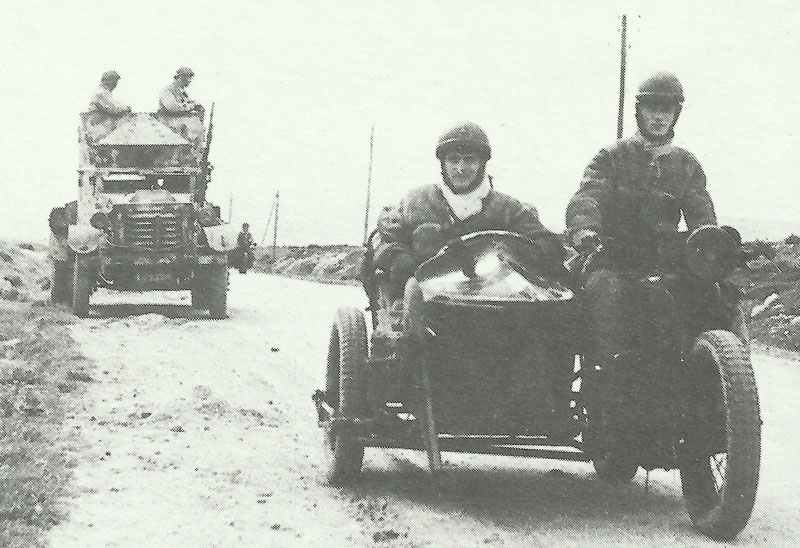
Free French Forces (Forces françaises libres – FFL)
The Free French Forces (Forces françaises libres – FFL) were the military forces that continued to fight Germany and the Axis powers during World War II after the fall of France in 1940.
Overview
Origins of the Free French Forces
After France was defeated by Germany in June 1940, the French government signed an armistice and established the Vichy regime, which collaborated with Nazi Germany. Refusing to accept surrender, General Charles de Gaulle fled to London and issued his famous ‘Appeal of 18 June 1940’, calling on French soldiers and citizens to continue the fight.
Those who answered this call formed the Free French Forces.
Composition and Structure
The Free French Forces were made up of:
– Soldiers who escaped from occupied France
– French troops stationed in Britain and overseas territories
– Volunteers from French colonies in Africa, the Middle East, and the Pacific
– Foreign volunteers and resistance fighters
They included:
– Free French Army
– Free French Navy (Forces navales françaises libres – FNFL)
– Free French Air Force (Forces aériennes françaises libres – FAFL)
Colonial troops from Chad, Cameroon, Senegal, and North Africa played a crucial role, especially in the early years.
Key Campaigns and Battles
The Free French Forces fought on multiple fronts:
Africa (1940–1943):
– Victory at the Battle of Kufra (1941) against Italian forces
– Campaigns in Chad, Libya, Tunisia, and the Levant
Middle East (1941):
– Fighting in Syria and Lebanon, sometimes against Vichy French forces
Europe (1944–1945)
– Participation in D-Day landings (Normandy, June 1944)
– Liberation of Paris (August 1944)
– Advance into Alsace and Germany
Naval and Air Operations:
– Escort missions, Atlantic patrols, bombing raids, and support for Allied operations
Role in the French Resistance

The Free French Forces worked closely with the French Resistance inside occupied France. In 1944, resistance groups were unified as the ‘Forces françaises de l’intérieur (FFI)’, which later merged with the regular French army to form a powerful liberation force.
Importance and Legacy
The Free French Forces:
– Preserved French sovereignty and legitimacy during occupation
– Ensured France was recognized as an Allied power, not a defeated nation
– Allowed France to be counted among the victors of World War II
– Helped secure France a permanent seat on the UN Security Council
After liberation, the FFL became the foundation of the modern French Armed Forces.
The Free French Army
After the fall of France, various units of French troops in the Middle East preferred to join the Allies. Their position was difficult; many Frenchmen thought them a small group of dissidents, and considered their leader – de Gaulle – a traitor.
In May 1941, as the possibility of operations in Syria became apparent, the scattered Free French Forces were assembled at Quastina in Palestine and formed into the 1st Free French Light Division.
Although the Free French troops fought with traditional Élan there were understandable problems of moral as former comrades-in-arms and fellow countrymen fought against each other. Altogether, the Free French suffered 1,300 casualties, a heavy total for such a small initial force.
After their victory in Syria the Free French troops were redeployed in North Africa, being reinforced by other French units. Initially Free French forces played only a minor role in operations, their most notable success being at Bir Hakeim when the 1st Free French Light Division maintained a stubborn defense of the desert stronghold during the Gazala battle before breaking out of their surrounding position to rejoin the Allied lines.
The position of the Free French changed dramatically with the collapse of the Axis in North Africa and the refusal of the vast majority of Vichy forces to resist the Allied armies. The Free French commanders were able to persuade the Vichy troops to go over to the Allied cause, a conversion made easier by the German take-over of the unoccupied zone. Thus, there was an enormous influx of numbers to the Free French who, with American help in armament and equipment, were now able to make a significant military contribution.
Free French troops fought in the final stages of the Tunisian campaign, but it was the war in Italy where the newly reorganized forces were to make their mark. At the end of 1943 units of the French Expeditionary Corps began to arrive in Italy; at first two divisions, the Corps was reinforced by a further two divisions in the spring of 1944. The French Expeditionary Corps was heavily engaged in the battles of Cassino and it was its out-flanking of the German mountain positions that made possible the Allied victory. After the capture of Rome in May 1944 the French troops were withdrawn from Italy in preparation for the liberation of France itself.
Organization of the Free French Army
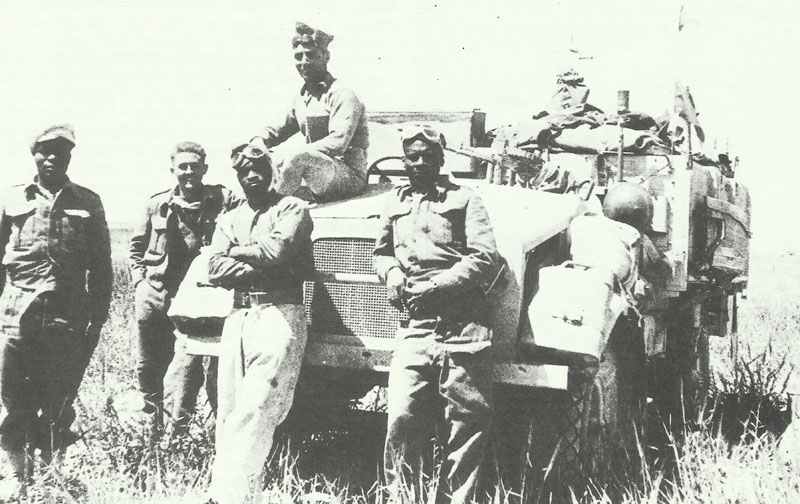
The 1st Free French Light Division which fought in Syria was divided into two small brigades:
The first comprising a battalion of the 13th Demi-Brigade of the French Foreign Legion and two Senegalese battalions;
the second, a naval infantry battalion (which included two motorized companies) and a further two Senegalese battalions.
The division was supported by an artillery battery of six guns; a tank company (eight tanks and armored cars) and a contingent of naval infantry. In addition, there were two squadrons of Circassian cavalry and a squadron of Spahis (mounted in trucks) under the command of Colonel Collet.
In North Africa, one of the first effective units was the Free French Fighting Column or ‘L’ Force, a small mixed force of armored cars, tanks, infantry and anti-tank and anti-aircraft guns under the command of General Leclerc. ‘L’ Force fought through the desert campaigns until 1943 when it was withdrawn from the front line to be re-equipped and re-grouped with other French elements to become the French 2nd Armored Division which then took part in the fighting in Normandy.
After the Syrian campaign the Free French could muster two brigade groups which were known as the 1st and 2nd French Light Divisions and were supported in the fighting in North Africa by a regiment of Moroccan Spahis who were able to provide reconnaissance detachments for the Free french when necessary.
Following the defeat of the Africa Corps at El Alamein, the brigades were withdrawn from the front and in February 1943 began to be formed into the 1st Free French Division. Its two component brigades fought independently in Tunisia until the autumn of 1943 when they were moved to Tripolitania to be reorganized and re-equipped.
During the short lull in the fighting that followed the Axis surrender at Tunis in 1943 the French forces were reorganized from the old Vichy and Free French troops into the French Expeditionary Corps. Besides the Free French units, French troops consisted of the XIX Corps (three colonial divisions and an armored group) and three battalions of the Corps Franc d’ Afrique plus two Moroccan tabors which were grouped with the US 2nd Corps. A tabor was a unit of Moroccan irregular troops who were known as Goumiers.
The four divisions of the French Expeditionary Corps under the command of General Juin comprised:
2 infantry regiments;
1 naval infantry regiment;
6 infantry battalions;
3 artillery regiments;
1 mountain artillery regiment;
3 Spahi regiments;
3 Algerian rifle regiments;
5 Moroccan rifle regiments;
1 Tunisian rifle regiment;
1 Chasseur battalion;
1 marine infantry battalion;
2 Foreign Legion battalions.
Besides the divisional troops there was a general reserve of three Moroccan goumier tabors, two armored regiments and two regiments of artillery. The forces of the French Expeditionary Corps reached over 100,000 men, while casualties suffered in Italy totaled 7,260 men.
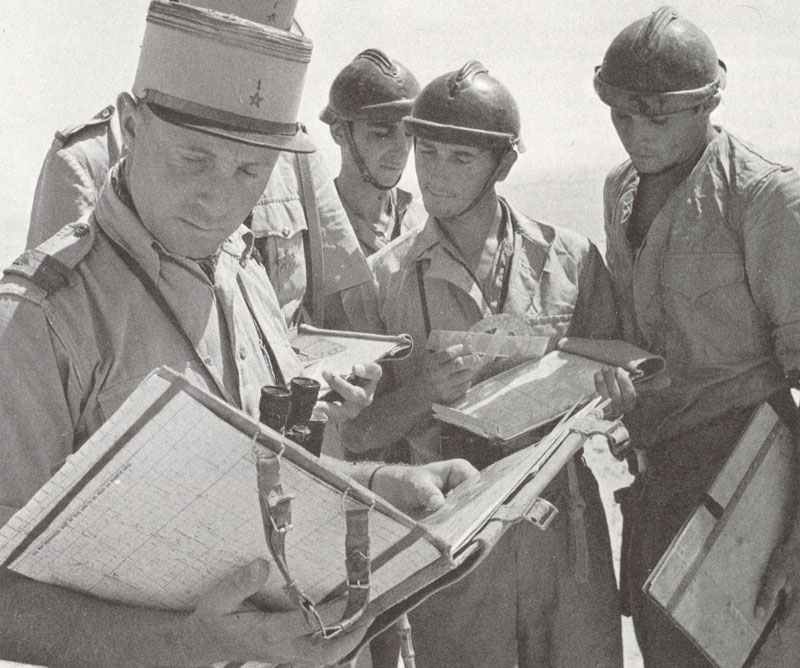
Free French Air Force
While most members of the French Air Force accepted the terms of the 1940 Armistice a number escaped with their aircraft to British bases in the Mediterranean where they were re-formed and re-equipped in part with British aircraft. Free French air units fought in the Middle East, Eritrea and North Africa and with the incorporation of Vichy forces from North Africa were heavily engaged against Axis forces in Italy and Southern Europe.
In North Africa and the Middle East it took some time for the Free French units to re-form on a regular basis. By July 1941 there were two bomber groups operating in Africa and two fighter escadrilles were united in Syria to form the fighter group ‘Alsace’ which, equipped with Hurricanes, was actively engaged over the desert during the North African campaign.
The French air units which had gone over to the Allies following the Operation Torch landings were re-equipped with modern British and American aircraft, some groups being transferred to England to conduct bombing operations against Germany but other groups remaining in the Mediterranean to continue the air war against the Axis.
References and literature
The Armed Forces of World War II (Andrew Mollo)
World War II – A Statistical Survey (John Ellis)

Desperately seeking advice on how to get more information on my father who served with The Free French. I know he served in North Arica at the places mentioned above he then parachuted behind the german lines and disrupted the railways for the D day landings i believe, I really need to find out more but i keep hitting a wall, any advice would be appreciated, many thanks Jan