

German Air Force of World War II.
Part II: The German Air Force in the second half of the war.

 here to Part I Luftwaffe
Jeschonnek’s successor, General Günther Korten, began with the correct concept. He reorganized the Luftwaffe allowing goal to strategic bombing, specifically of Russia, and to home defense, minimizing the use of air strength supporting the ground forces as low as possible. Sadly for Korten’s strategies, the Soviet counter-offensive between the summer of 1943 and the spring of 1944 mainly disregarded the strategic bombing of Russian production centers. At the same time, the Axis powers had been pushed away from North Africa and the Allies were moving forward progressively upward through Italy.
Even so, throughout the first half of 1944 Korten had some reason for confidence. His first-line planes strength was currently well over 5,500; the petrol problem was starting to indicate signs of advancement; and so was the providing of better-trained aircrew from the Luftwaffe flying schools. A number of long-awaited modern types of planes were beginning to get into service, like the He 177 and Ju 188 bombers, the Me 410 Zerstörer (destroyer, heavy fighter) as well as the He 219 night fighter; a great deal was predicted from the new technology of jet fighters next under development; and the night fighter force was starting to show good results versus the Allied bombers.
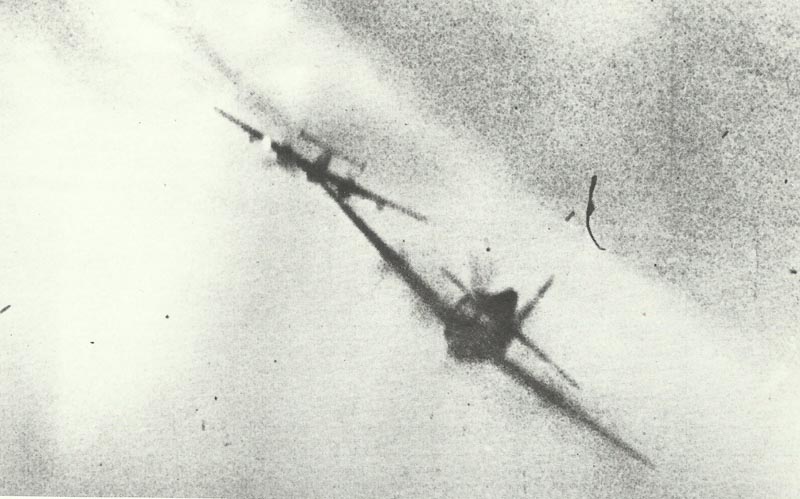
A pair of primary aspects were to conspire in opposition to his positive outlook. Initial, since the early summer of 1943 the Allied bombing war bad been focused increasingly more versus the facilities of German planes and aero-engine manufacturing; 2nd, the presence of American day fighters like the long-range P-51 Mustang, which in turn offered much-needed coverage to the formerly unescorted USAAF day bombers flying far into German territory.
Many experts have calculated that Allied air raids around mid-1943 and the end of 1944 destroyed the Luftwaffe some 14,000 fighters and 4,000 other planes in lost production. However, if these planes had been ready, shortages of aircrew, fuel and munitions might have seriously restricted their successful use.
Included in this campaign were certain Allied strikes on Romanian along with other oilfields providing fuel for the German war effort.
Next, during the summer of 1944, followed the D-Day invasion in Normandy and the Soviet advance into Poland, and following that the drop accumulated impetus. Panic actions, like the V-weapons production, the increase of fighter manufacturing to the practical elimination of bombers and other planes, the appearance of jet- and rocket-powered fighters, almost all arrived too late to stern the tide. The night fighter force diminished in performance; the serious raids on Allied airfields in Western Europe at the outset of 1945 – Operation Bodenplatte – was unsuccessful; and, ultimately, the fuel ran out.
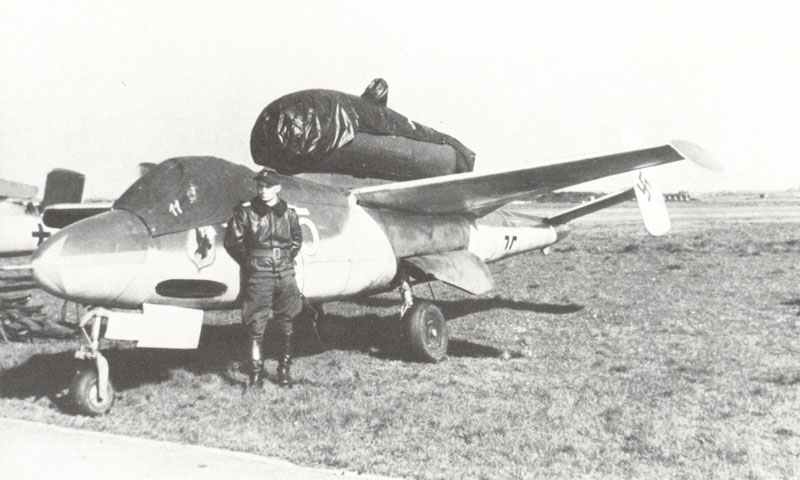
In August 1939, on the eve of ww2, Goering’s Order of the Day to the Luftwaffe had mention of an air force ‘inspired by confidence in our Führer and Commander-in-Chief … prepared to undertake each order from the Führer with fast momentum and undreamed of might’.
The fact, the epitaph to have an air force that was failed by its leaders, had been written after the conflict by General Karl Koller, who succeeded to the rank of Chief of the Luftwaffe General Staff following General Korten, who was killed by Stauffenberg’s bomb in the Führerhauptquartier:
‘There are numerous explanations why Germany lost World War 2; political, economic and military factors which were our own failing. Not one of these causes had been crucial on their own, neither were they in unison crucial. Had they been prevented, an even more beneficial progression of the war might definitely have been likely. Really aside from them, what was crucial by itself was the lack of air supremacy.
We continued to be voices crying useless in the forests. Guarantees were made to produce the greatest air force practical following the end of the Russian conflict. Countless men were then to be removed from the Army and were to be taken to the aircraft industry and to the German Air Force. Just the Air Force was to be increased. At the moment, nevertheless, the air armament was placed way down on the list; initially were u-boats, next followed tanks, after that assault guns, then howitzers or Lord knows what else, and after that followed the Air Force. Meanwhile, the Russian war was eating away soldiers, material, weapons and aircraft and the simply stuff that remained for the Air Force was a guarantee that was in no way saved. Its job was to make sacrifices.’
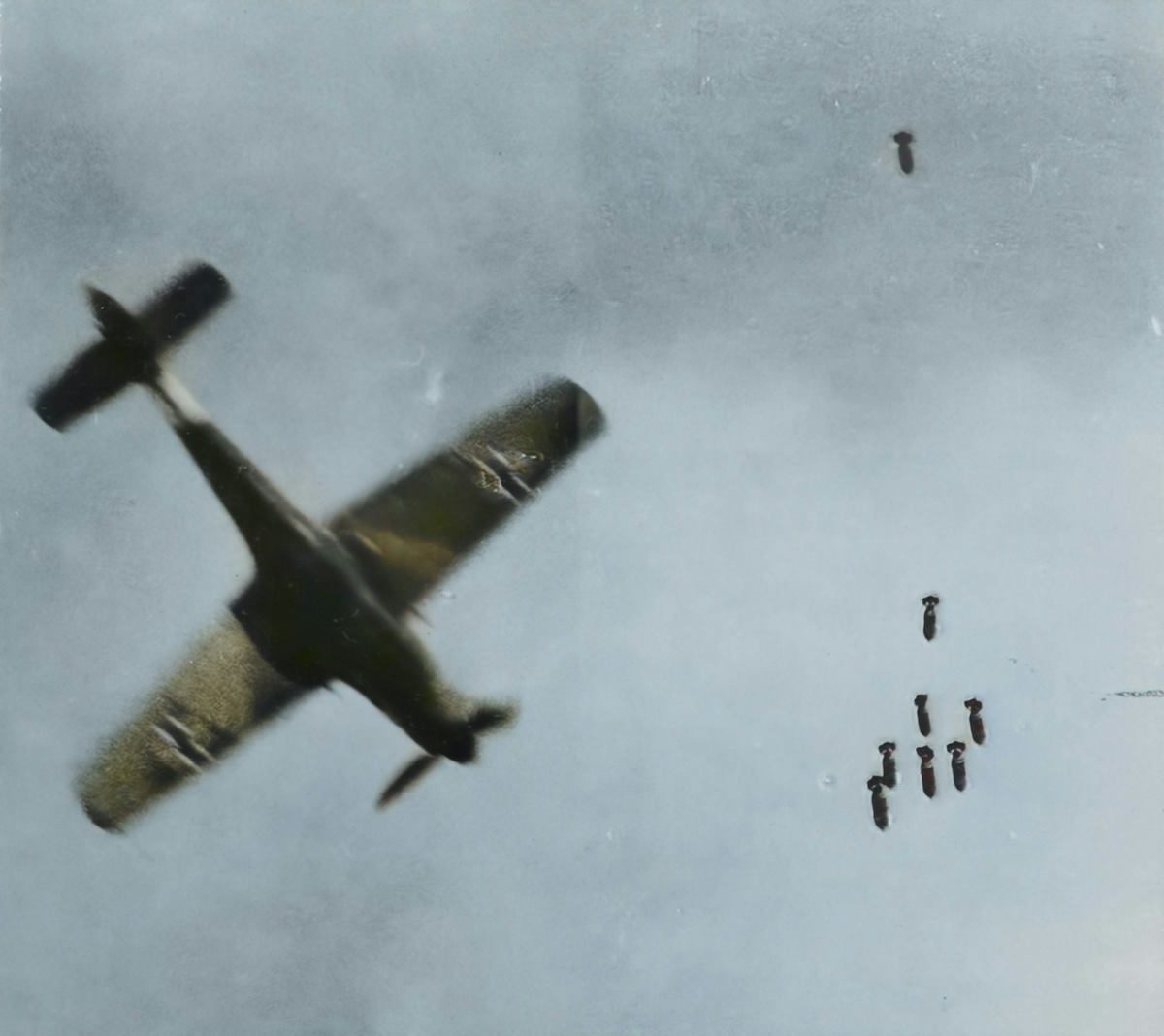
Here to Part I Luftwaffe
The top Fighter Aces of World War II
Nation | Name | Victories |
|---|---|---|
Germany | Hartmann, Erich | 352 |
Barkhorn, Gerhard | 301 | |
Rall, Günther | 275 | |
Kittel, Otto | 267 | |
Nowotny, Walter | 258 | |
Bautz, Wilhelm | 237 | |
Rudorffer, Erich | 222 | |
Bär, Heinz | 220 (16 with Me 262 ) | |
Graf, Hermann | 212 | |
Great Britain | Pattle, M.P.st.J. | 41 |
Johnson, J.E. | 38 | |
Malan, A.G. | 35 | |
Russia | Kozhedub, Iwan Nikitch | 62 |
Pokryshkin, Alexander Ivanovich | 59 | |
Rechkalow, Grigori Andreevich | 58 | |
Gulayew, Niklai Dmitrievich | 57 | |
Yewstigneew, Kirill Alekseevich | 52 | |
U.S.A | Bong, Richard | 40 |
No 1: Erich Hartmann
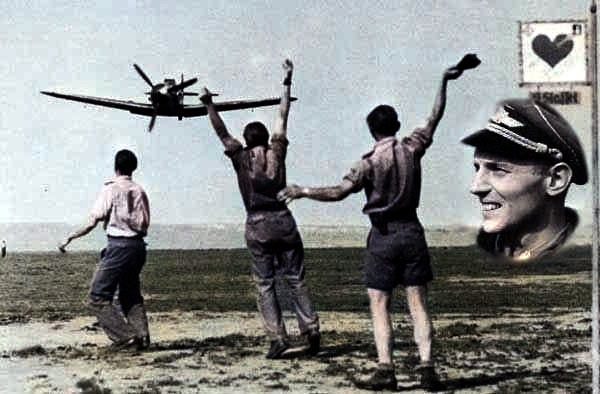
Erich Alfred Hartmann (1922–1993) was a German Luftwaffe fighter pilot during World War II and is recognized as the most successful fighter ace in history.
– Full name: Erich Alfred Hartmann
– Nickname: “Bubi” (“The Kid”) to his comrades, and “The Black Devil” by Soviet pilots
– Born: April 19, 1922, in Weissach, Germany
– Died: September 20, 1993, in Weil im Schönbuch, Germany
– Service: Luftwaffe (German Air Force), 1940–1945
– Unit: Jagdgeschwader 52 (JG 52), which operated mainly on the Eastern Front
– Aircraft flown: Primarily the Messerschmitt Bf 109
– Confirmed aerial victories: 352, all on the Eastern Front — the highest number ever recorded by any pilot in history
– Missions flown: Over 1,400 combat sorties
– Awards: Knight’s Cross of the Iron Cross with Oak Leaves, Swords, and Diamonds (one of Germany’s highest military honors)
After the war
– Hartmann was captured by Soviet forces in May 1945 and spent for revenge 10 years in Soviet prison camps, being released in 1955.
– He later joined the West German Air Force (Bundesluftwaffe) and helped train pilots during the Cold War.
– He retired in 1970 as a Colonel (Oberst) – ´dissatisfied with the “bureaucratic army” that is the new German Armed Forces.
Despite his record, Hartmann was known for his tactical discipline — he emphasized surprise, accuracy, and avoiding unnecessary risks. He famously told new pilots: “See – decide – attack – break.”
References and literature
Luftkrieg (Piekalkiewicz)
German Aircraft of World War 2 in Colour (Kenneth Munson)
Luftwaffe Handbook (Dr Alfred Price)

The maximum German production of aircraft and armor was Nov. 1944 despite all the bombing! The only truly effective target was Germany’s fuel refineries!