
Creation and Campaigns of the 12th SS Panzer division Hitler Youth.
Designations, commanders, insignia, organization, in Normandy 1944, Battle of the Bulge and in Hungary 1945.
12th SS Panzerdivision Hitlerjugend: History, Operations & Structure
The history of the 12th SS Panzer Division Hitlerjugend in Word War II.
Overview
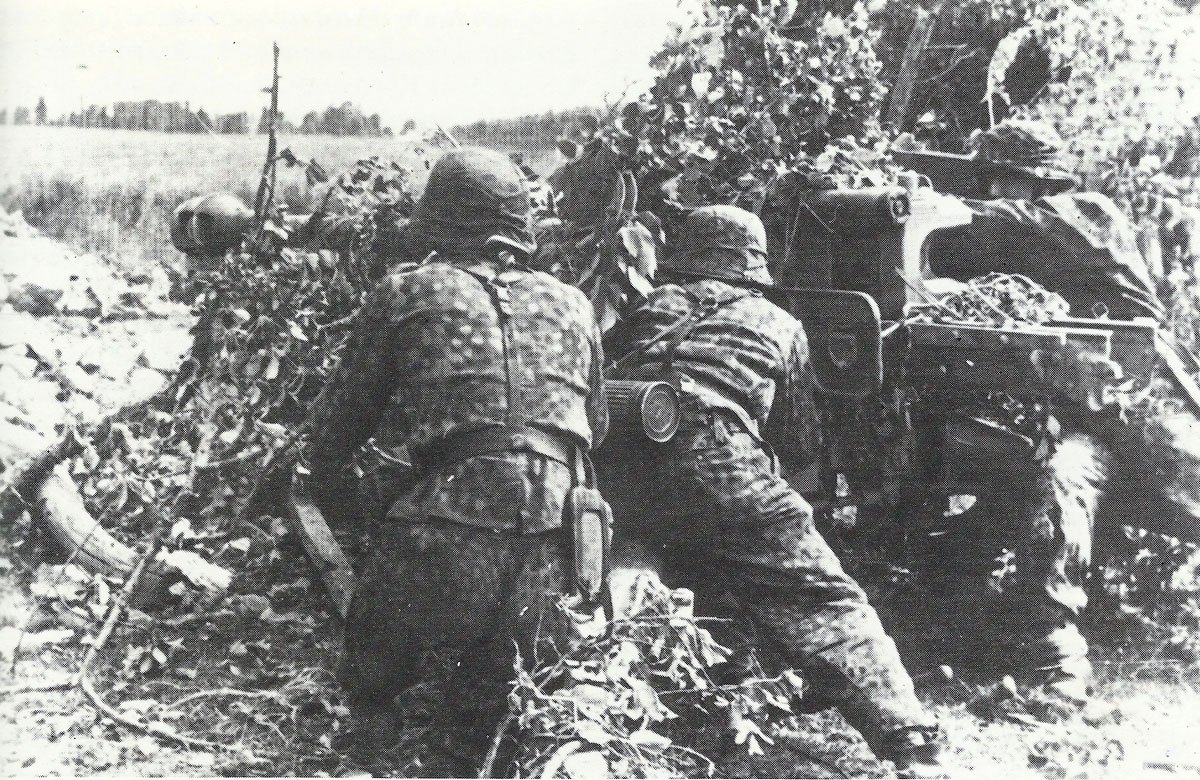
The 12th SS Panzer Division Hitlerjugend was a German armored division that fought during World War II. It was formed in 1943 and comprised primarily of young recruits from the Hitler Youth organization. The division was notable for its early involvement in the Normandy campaign following the D-Day landings in June 1944.
The division was known for its fierce fighting spirit, but it also faced challenges due to the inexperience of many of its soldiers. Despite this, the division participated in several key battles, including the defense of Caen and the counteroffensive in the Falaise Pocket.

The division was equipped with tanks and other armored vehicles, and it was involved in various operations throughout the war until it was ultimately destroyed in combat by the end of the war in 1945. The legacy of the division is complex, as it was composed of young men who were indoctrinated into the Nazi ideology, and its actions during the war have been the subject of historical scrutiny.
Designations
SS-Panzer-Grenadier-Division Hitlerjugend (February 1943)
12. SS-Panzer-Division Hitlerjugend (October 1943)
Commanders
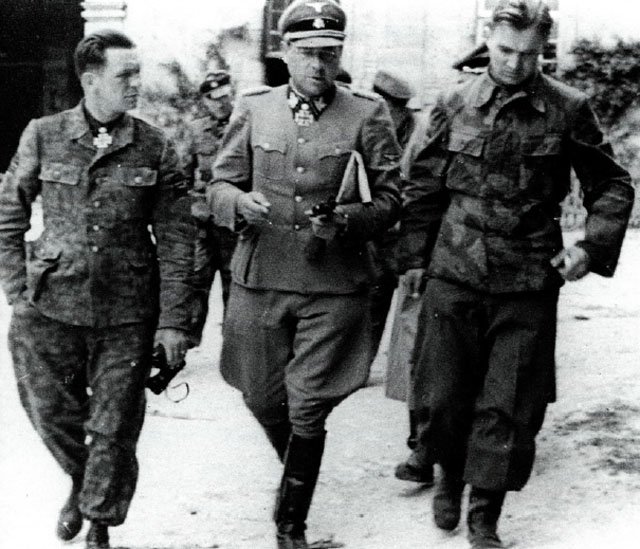
- SS-Brigadeführer Fritz Witt (June 1943 – June 1944)
- SS-Brigadeführter Kurt Meyer (June – September 1944)
- SS-Obersturmbannführer Hubert Meyer (September – October 1944)
- SS-Brigadeführer Fritz Kramer (October – November 1944)
- SS-Brigadeführer Hugo Kraas (November 1944 – May 1945)
Formation and recruitment of the division (1943)
Although the members of the Hitler Youth organization had already been encouraged to volunteer for the Waffen-SS, the ‘youth leader of the German Reich’, Artur Axmann, suggested to the Reichsführer SS, Heinrich Himmler, to set up a complete SS division with boys born in 1926.
Adolf Hitler approved this plan and appointed SS-Gruppenführer Berger as commander, who had even suggested himself to the Führer. Himmler, on the other hand, reasonably preferred a battle-hardened veteran with close ties to the HJ (short for Hitlerjugend = Hitler Youth). This was the 35-year-old SS-Standartenführer Fritz Witt, who was regiment commander in the 1st SS Panzer Division Leibstandarte-SS-Adolf Hitler and had received the Knight’s Cross with oak leaves. Witt thus became Germany’s second youngest general – after 31-year-old Major General Adolf Galland of the Luftwaffe – when he was appointed SS Brigade Leader on 1 July 1943.
In May 1943, the first 8,000 seventeen-year-olds arrived for a two-month preparatory introduction. From July to September 1, 1943, 16,000 young men formed the units of the Hitler Youth Division at military training areas around Turnhout in Belgium.
The cadre of battle-tested officers and non-commissioned officers came mostly from the Leibstandarten Division, but also from all other SS tank divisions and a number of army officers were also transferred to the new SS Division. In addition, war-proven front soldiers of the army and air force, who had emerged from the Hitler Youth, were transferred to this otherwise pure recruit division.
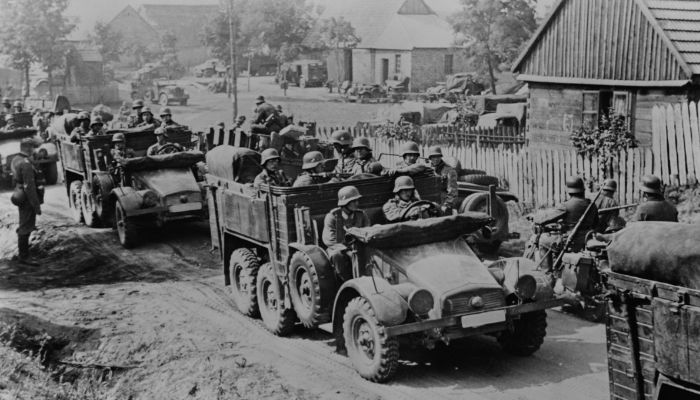
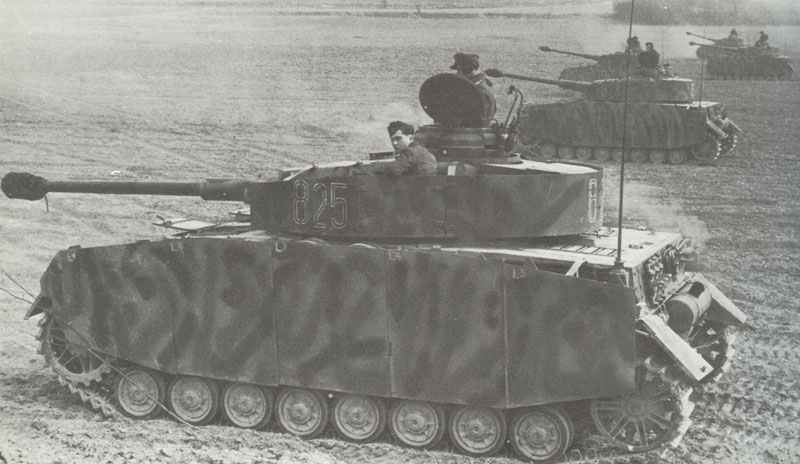
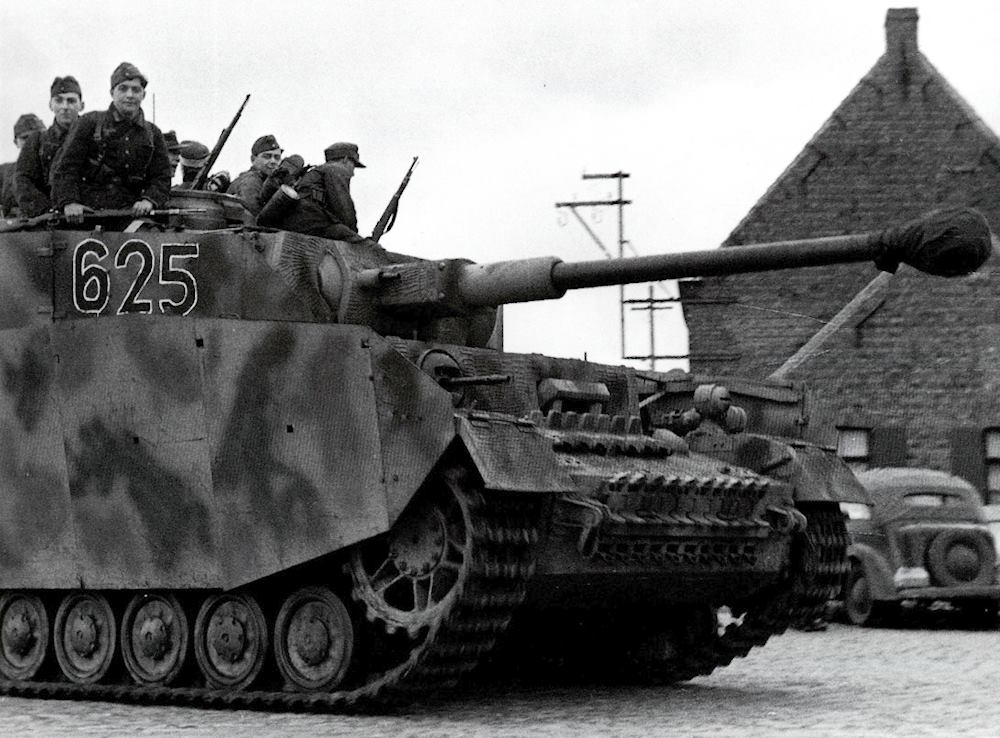
One infantry fighting vehicle battalion and five motorized Panzergrenadiers infantry battalions received Italian booty vehicles before they received modern German equipment until May 1944.
Originally a Panzergrenadier Division, the formation received the number ’12’ and was expanded to a Panzer Division on 21 October, together with a complete Panzer Regiment with 218 Panzer IV and Panzer V Panther. The SS-Panzer-Regiment 12 was set up from summer 1943 mainly from the I.//SS-Pz.Rgt.1 of the LSSAH and was strengthened until November to the Pz.Rgt.12 ‘HJ’.
The division was renamed at this moment to 12th SS-Panzer-Division ‘Hitlerjugend’ or short only ‘HJ’.
The Panther detachment was not completed until the beginning of 1944 in Mailly-le-Camp by incorporating the Army’s Panzer Brigade 10. The tank reconnaissance detachment 12 was completed in September 1943 at Rurnhout and the tank artillery regiment 12 at the same time at Mol in Belgium. In the spring of 1944, the 1st detachment received 18 self-propelled howitzers Hummel and Wespe and light armored infantry fighting vehicles as armored artillery observation vehicles. At the same time the SS Rocket Launcher detachment 12 from Bohemia and the Panzer Flak detachment 12 each with four batteries arrived at the division.
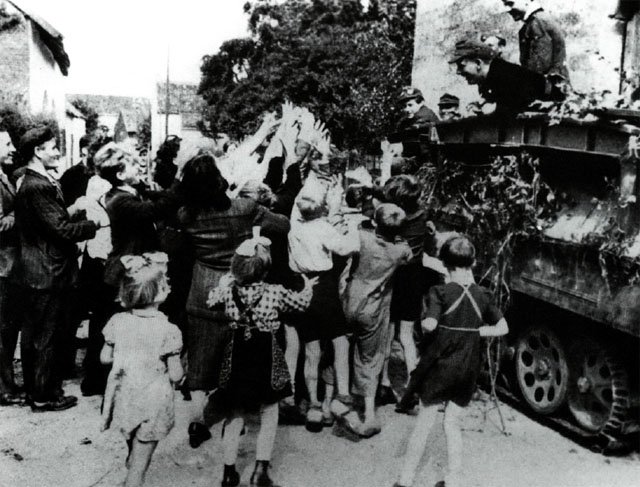
Even taking into account the cadre, the average age in the division was only 18 years. And instead of the usual cigarette rations, sweets were handed out to its members.
In April 1944, the division was declared front-ready and moved to northern France under the command of the I SS Panzer Corps.
Organization
Organization 12th SS Panzer Division Hitler Youth :
12th SS-Panzer-Division Hitlerjugend | Units |
|---|---|
Stab/12.SS-Panzer-Division 'HJ' | Div.Begl.Kp. (tgp) (Staff, partly armoured) |
SS-Pz.Gren.Rgt. 25 | I.-III.(Rgt) 13.-16.Kp (panzer grenadiers) |
SS-Pz.Gren.Rgt. 26 | I.-III. as Rgt.25 / III.(gp) 26 APC (panzer grenadiers) |
SS-Panzer-Regiment 12 | I.-II.-I.(4 companies PzKpfw V Panther)-II.(4 companies PzKpfw IV) |
SS-Pz.Aufkl.Abt. 12 | 2 armoured cars, 3 armoured recon, V. companies) |
SS-Pz.Artillerie-Rgt. 12 | I.-III.-I.(self-propelled artillery) - 18 SP howitzers, Panzer observation battery |
SS-Werfer-Abt. 12 | 4 rocket launcher batteries with towing vehicles |
SS-Pz.Nachrichten-Abt. 12 | telephone and radio companies, light messengers column |
SS-Pz.Jäger-Abt. (Sfl.) 12 | 4 tank destroyer companies with towing vehicles and on self-propelled guns (May 1944) |
SS-Pz.Pionier-Btl. 12 | 2 engineer companies (motorized); 3rd Panzer Engineer bridge construction company |
SS-Pz.Flak-Abteilung 12 | 3 heavy and two mixed anti-aircraft batteries |
(Pz.)Div.Nachsch.Fhr. 12 | Battalion of Economy, Supply, Repair and Medical |
SS-Pz.Ers.Bataillon 12 | 5 reserve companies, division combat school |
Deployment in Normandy and D-Day (1944)
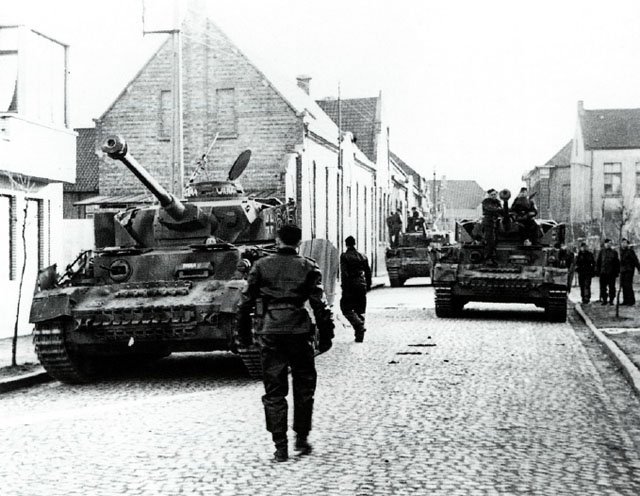
When the Allies landed in Normandy on 6 June 1944, the 12th SS Panzer Division Hitler Youth was ordered to the front. After a night march, it was the first SS formation to go into action on 7 June.
A combat group under the commander of the SS-Panzergrenadier Regiment 25, SS-Standartenführer Kurt Meyer, including a battalion with PzKpfw IV, drove the 27th Canadian Armored Brigade away from the Caen-Carpiquet airfield. The young soldiers succeeded in destroying 28 Allied tanks during their first combat mission, while they only had six men to lose.
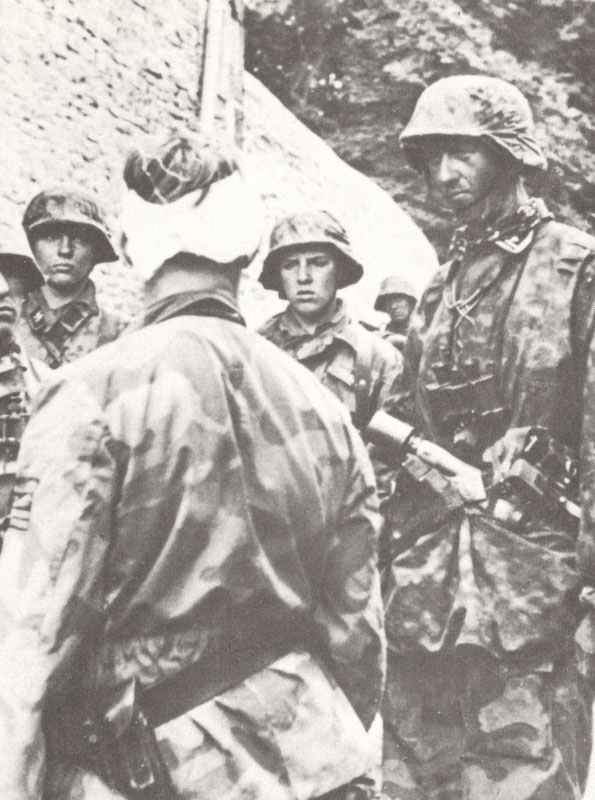
This scheme was repeated for the next month. The teenage soldiers followed their experienced officers in a series of highly effective attacks against the British and Canadian troops around Caen.
However, a consequence of their inexperience combined with fanaticism was high losses. In four weeks the division suffered 60 percent losses. In addition, violations of the Geneva Convention occurred when, on 16 June 1944, some 65 Canadian and British prisoners were murdered.
For these war crimes of the division Kurt Meyer was sentenced to life imprisonment after the end of the war, from which he served nine years. On 16 June Franz Witt was killed by fire from warships and command of the 12th SS Panzer Division Hitlerjugend was transferred to the 33-year-old ‘Panzer-Meyer’. He led the division in almost continuous battles against strongly superior opponents until the survivors were withdrawn to the Potigny area on 11 July.
There was a refreshment close behind the front line by field replacement units, which partly came from the Luftwaffe.
Falaise Pocket
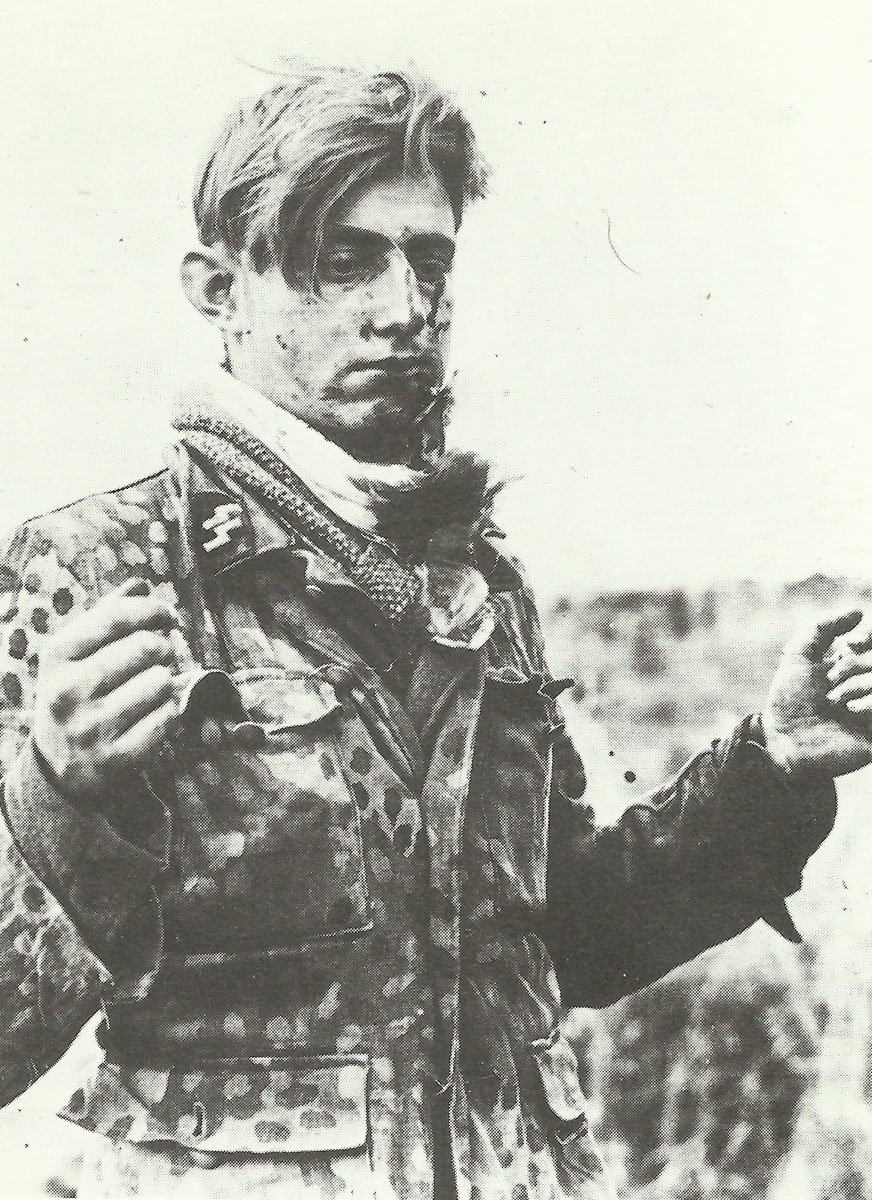
Only a week later, however, Hitler Youth was back in the front line to meet the British operation ‘Goodwood’. At the beginning of August, however, the 1st SS Panzer Corps was separated, with the LSSAH being sent west to Avranches, while the Hitler Youth held the northern corner of the Falaise pocket, with 90,000 German soldiers to be enclosed by the Allies.
Fighting fiercely against the 4th Canadian and 1st Polish armored divisions, Meyer fought with great determination, despite an overwhelming enemy artillery superiority, while at the same time the Allied fighter-bombers ruled the skies.
Hitler Youth escaped from the pocket, but of the other troops around Falaise, only 30,000 could do so. Meyer was wounded as he held Hill 159 with only 500 Panzergrenadiers against the 3rd Canadian Infantry Division.
Elements of the 12th SS Panzer Division were at that time at Rouen on the Seine for refreshment, where they formed a line of defense against approaching US troops. Until 25 August these troops held their positions to enable other German units to retreat across the river.
Only 3,300 survivors of the 12th SS Panzer Division Hitler Youth reached the Belgian border. By the beginning of September the division had reached the Meuse River, but Meyer was captured by Belgian resistance fighters and Hitler Youth consisted of only 600 operational soldiers and had no tanks left.
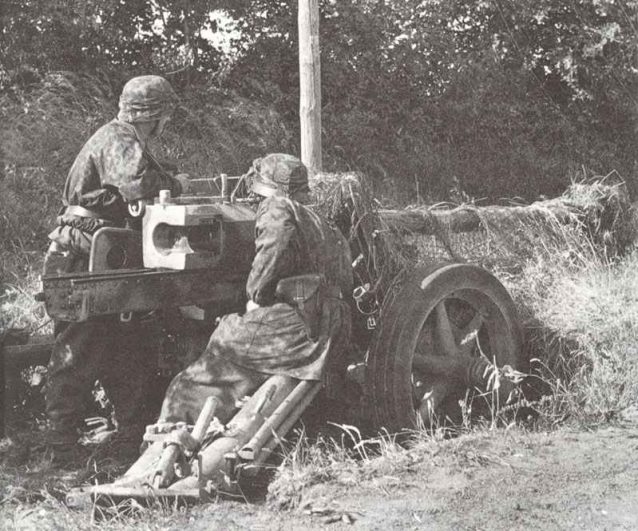
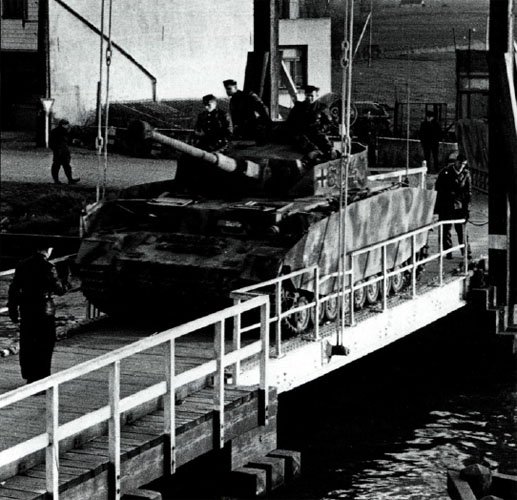
Battle of the Bulge and Bastogne
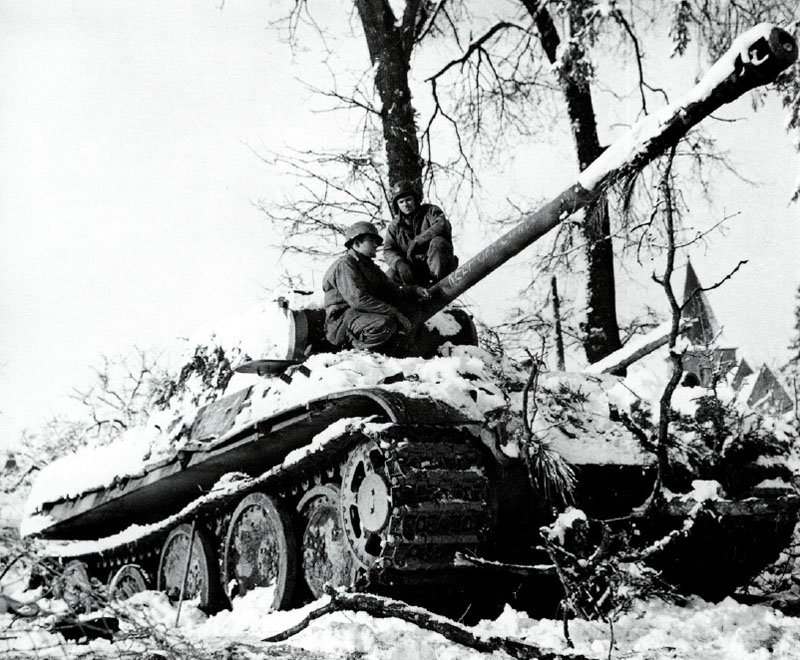
HJ’ was pulled out of the front at the beginning of October 1944 and refreshed in the area of Diepholz and Bassum near Bremen. In the middle of December the transfer to Eifel took place and the 12th SS Panzer Division Hitlerjugend took part in the Ardennes Offensive (Battle of the Bulge) within the 6th SS Panzer Army.
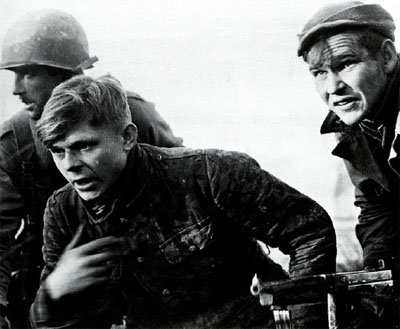
Divided into four battle groups for attacks on the Elsenborn ridge, the division made little progress. From 16 December, the attack took place via Losheim on Rocherath and Krinkelt until 18 December, then on Büttgenbach from 19 to 22 December and then via the Ourthe sector against the northern flank of Bastogne.
On 1 January 1945 it was in the siege ring around Bastogne, but until 18 January all the troops there were forced to retreat. HJ had already received a brief refresher at St Vith and marched on 12 January 1945 in the direction of Cologne, from where it was to be moved to the Eastern Front. In Cologne the division received further replacements and new material.
From the end of 1944, the division received most of its replacements from disbanded units of the Kriegsmarine or Luftwaffe. These soldiers were mostly of older age, had received only a short training as infantrymen years ago and had no experience in ground combat. However, they were comprehensively trained in the Division Combat School and then joined the combat troops without major disadvantages.
Hungary 1945 – Operation Spring Awakening
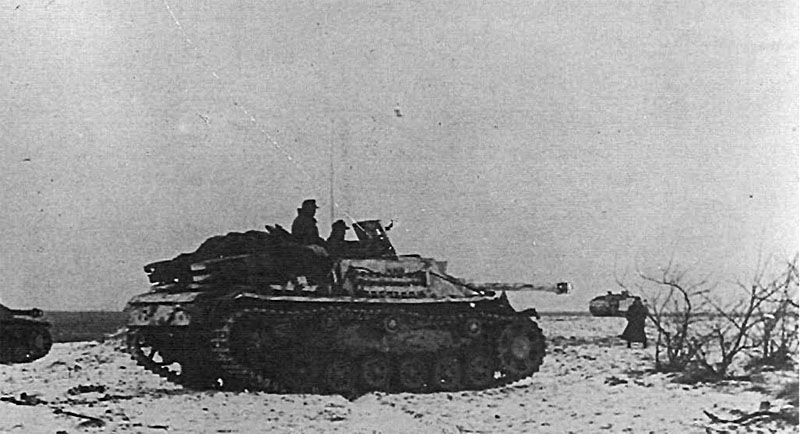
After the cessation of the Ardennes offensive, Hitler Youth was sent to Hungary together with the Leibstandarte to take part in the ‘Spring Awakening’ offensive. This offensive took place in the area of Lake Balaton with the final goal to lift the siege of Budapest, which was surrounded by Soviet troops.
At the beginning of February 1945 the division fought in a successful preparatory operation in which a Russian bridgehead across the river Gran was smashed. The main offensive took place on 6 March, but was forced to a premature halt by a combination of completely unsuitable terrain for tanks and persistent Russian resistance.
The I SS-Panzer-Korps, which included not only the Leibstandarte but also the Hitler Youth, was forced to retreat to the northwest and was pushed back to Vienna by 13 April.
At that time the total strength of the 12th SS Panzer Division Hitler Youth – including the soldiers in military hospitals and separated from the division – was just over 7,730 men, but the actual fighting strength was much lower.
Until the beginning of May the defense took place in the Viennese forest, southwest of Vienna. Now, the only priority was to march west towards the approaching US Army in order to escape capture by the Soviets.
On 8 May 1945, 455 survivors surrendered to the 52nd US Infantry Division near Enns in Austria with a single tank of the Hitler Youth – of originally 21,300 soldiers.
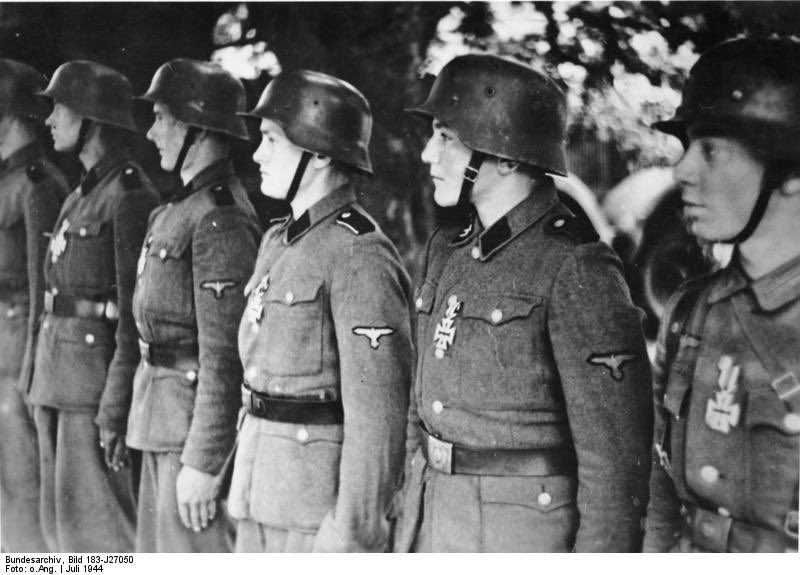
Fifteen members of the Hitler Youth Division were awarded the Knight’s Cross.
War Crimes of the 12th SS Panzer Division “Hitlerjugend”
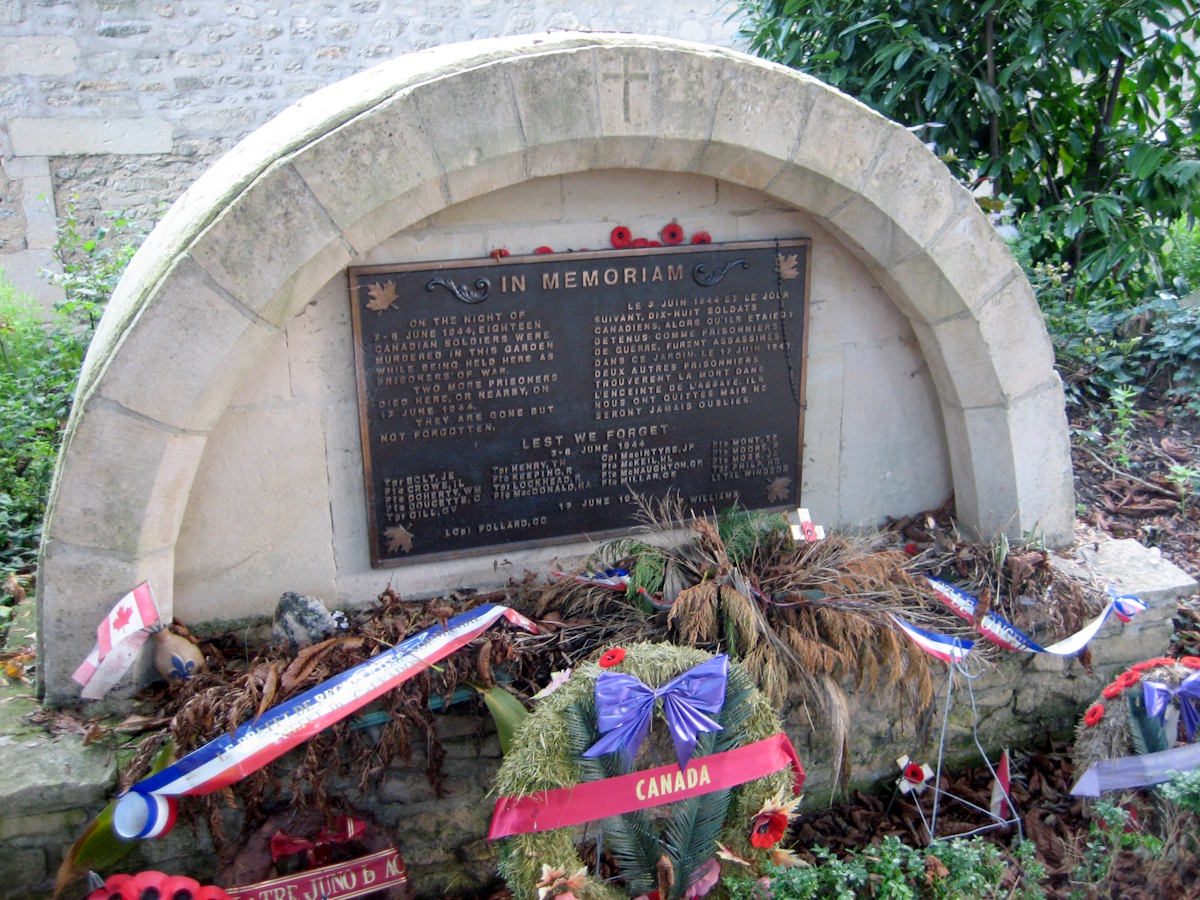
The most significant war crime committed by the 12th SS Panzer Division was primarily the execution of Canadian prisoners of war at the Abbaye d’Ardenne. This is one of the best-documented crimes of this division.
The killings were not isolated acts of excess. They occurred within the context of ideology, intense combat, and a strained chain of command.
The following sections provide a historical context for the events, the investigations, and the trial of Kurt Meyer.
Historical Background: June 1944
The division was formed in 1943 and recruited many of its soldiers from the Hitler Youth. Experienced SS officers and non-commissioned officers supplemented the ranks.
In June 1944, the division was tasked with fighting the Allied bridgehead near Caen. It was under intense time pressure and in a chaotic combat situation involving retreat, counterattacks, and delaying operations.
Composition and Operational Profile of the Division
The 12th SS Panzer Division “Hitler Youth” was particularly ideologically driven. Many soldiers came directly from politically influenced youth organizations.
In combat, they were deployed for rapid attacks, counterattacks, and urban fighting. Nevertheless, the division was not yet fully organized.
In early summer 1944, following the Allied landing in Normandy, it was transferred there. There, it quickly became embroiled in heavy defensive battles.
High casualties, communication problems, and aggressive tactics characterized its operations.
Situation in the Caen Area After the Invasion
In the Caen area, the division encountered Canadian, British, and other Allied troops. These forces advanced south and east from the landing beaches.
The terrain consisted of villages, hedgerows, and small combat zones. Close-quarters combat was the norm.
The fighting around Authie, Bretteville, and the approaches to Caen exacerbated the situation. Prisoners were quickly seen as a burden.
It was in this context that the shootings of Canadian soldiers took place, which were later regarded as a major war crime committed by the division.
Canadian Prisoners and the Abbaye d’Ardenne
The Abbaye d’Ardenne, southwest of Caen, became the scene of prisoner deportations and killings in June 1944. Postwar investigations by Canadian, British, and German authorities were able to reconstruct the events with unusual precision.
Arrest Following the Battles for Authie and Bretteville
Several Canadian soldiers were taken prisoner by the Germans during or after the battles for Authie and Bretteville. Among them were members of the North Nova Scotia Highlanders and other Canadian units.
They should have been treated as regular prisoners of war. However, instead of being transferred in accordance with proper procedures, individual prisoners were taken to the Abbaye d’Ardenne.
There they were interrogated and detained. In several cases, they were shot without due process.
Killings at the Abbey between June 7 and 8, 1944
Between June 7 and 8, 1944, members of the SS killed several Canadian prisoners in or near the Abbaye d’Ardenne. The victims included soldiers who were verifiably alive when they fell into German custody.
The literature cites varying numbers of victims. What is clear is that the killings were carried out according to a plan or at least with the tacit approval of senior SS officers.
Questions of Responsibility and the Chain of Command
The question of responsibility does not concern only the immediate perpetrators. Local leadership is also under scrutiny.
Historians and courts investigated whether specific orders, tacit approval, or a general culture of violence within the unit triggered the killings.
Role of regimental and divisional leadership
SS-Standartenführer Kurt Meyer was a particular focus of attention as commander of SS Panzergrenadier Regiment 25 and later as division commander. Investigators sought to determine whether he knew about the shootings, ordered them, or failed to prevent them.
A chain of decisions also existed at the regimental and battalion levels. Prisoners were not considered combatants in need of protection.
Assessment remains difficult, as direct written orders are almost always absent.
Command Structure, Discipline, and the Culture of Violence
The Waffen-SS in the Normandy campaign was characterized by ideology, intense combat, and poor discipline. This fostered violence against prisoners, the wounded, and alleged partisans.
In the case of the Abbaye d’Ardenne, evidence suggests that prisoners were not treated as soldiers entitled to standard treatment. These acts of violence violated the laws of war, which protect prisoners of war.
Evidence and Historical Accounts
The reconstruction of the events is based on exhumations, witness statements, military documents, and court proceedings. Especially in the Caen area, the body of evidence is quite extensive compared to other war crimes committed at the front.
Canadian Investigations and Exhumations
After the liberation of the area, investigators exhumed bodies and identified victims. Canadian investigators collected statements from survivors, relatives, and civilians.
These investigations helped determine crime scenes, the movements of prisoners, and potential perpetrators. The exhumations provided the forensic basis for the subsequent trial of Kurt Meyer.
Witness Testimonies, Documents, and Research Debates
Witness testimonies came from both Canadian and German sources. Naturally, there are gaps in memory and contradictions—this is almost inevitable in accounts of wartime events.
Nevertheless, a fairly consistent picture of the shootings emerges. Research primarily focuses on the degree of command responsibility and Meyer’s personal liability.
Hardly anyone disputes the killings themselves. However, command responsibility remains a contentious issue.
The Trial of Kurt Meyer
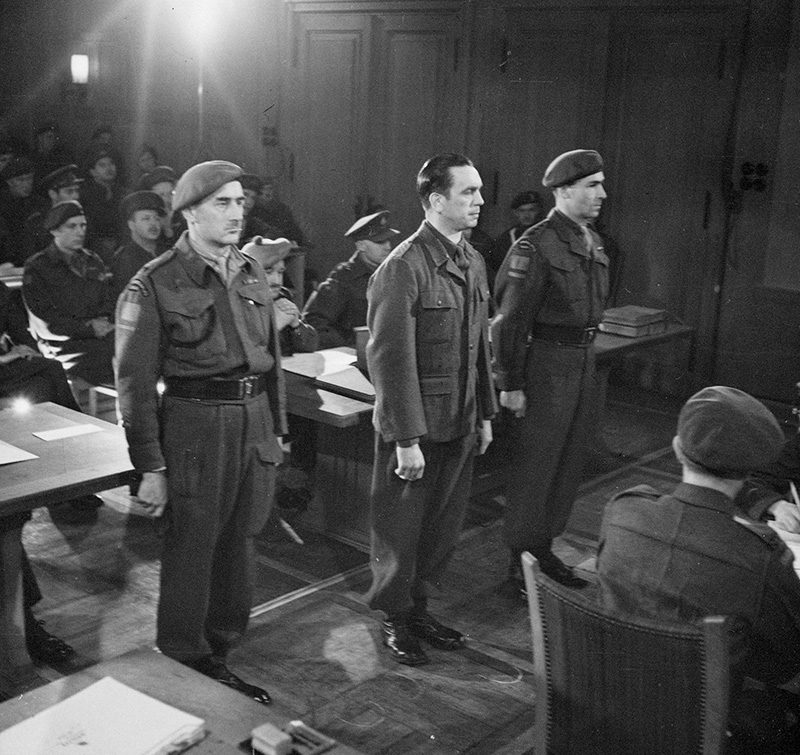
The trial of Kurt Meyer is one of the earliest and best-known Allied war crimes trials against a high-ranking Waffen-SS officer. It combined criminal prosecution with a public debate on guilt, orders, and responsibility.
Charges, Proceedings, and Verdict
Kurt Meyer was charged with the shooting of Canadian prisoners and other war crimes. The trial took place before a Canadian military court.
Witnesses, exhumations, and situational analyses provided the evidence. Meyer was convicted.
The verdict made him a symbolic figure of criminal prosecution and a touchstone for the question of how far a commander’s responsibility extends for the actions of his subordinates.
Public Perception and Subsequent Assessment
In Canada, the trial shaped the memory of the Normandy battles from an early stage. The treatment of their own prisoners was a particularly sensitive issue.
In parts of postwar German society, Meyer was at times viewed more as a front-line officer than as a perpetrator. Later historical assessments take a more nuanced view of the trial.
They view it as an important document of legal reckoning—but also as a case in which it remains difficult to unequivocally prove individual command responsibility under wartime conditions.
Placement in the history of remembrance
The division’s crimes are today closely linked to the Canadian memory of Normandy. They occupy a key position in research on the Waffen-SS.
They are considered a well-documented example of systematic violence against prisoners.
Significance for Canadian War Memory
In Canadian memory culture, the victims of the Abbaye d’Ardenne represent the cost of the Normandy battles. They symbolize the vulnerability of prisoners of war.
The events recur repeatedly in memorials, military historical accounts, and veterans’ narratives. The Abbaye d’Ardenne is thus not only a crime scene but also a place of remembrance.
It stands for the connection between frontline combat, capture, and disregard for the laws of war.
Canadian War Crimes
In the area around Caen, however, shootings of German prisoners of war also occurred on the Canadian side. According to Antony Beevor, as early as June 8, soldiers of the Canadian Inns of Court Regiment killed several German prisoners because they refused to sit unprotected on the hoods of Canadian vehicles, in violation of the Geneva Convention. In response, the 26th Panzergrenadier Regiment of the 12th SS Panzer Division “Hitlerjugend” shot three Canadian prisoners.
Subsequently, the fighting between the SS Division “Hitlerjugend” and the Canadian troops, who repeatedly clashed, escalated into extremely bitter engagements. Beevor describes, for example, the costly battle for the village of Carpiquet west of Caen on July 4, in which the 26th SS Panzergrenadier Regiment encountered the French-Canadian Régiment de la Chaudière.
The few German prisoners were reportedly treated with extreme brutality after the battle. According to a Canadian source, the Franco-Canadians raged “like berserkers” at dawn and slit the throats of every SS soldier they encountered—regardless of whether he was wounded or already dead. One officer is quoted as saying that no prisoners were taken by either side that day.
Beevor also refers to the fighting for the road to Falaise on August 8 and 9. Of the 1,327 German prisoners that the II Canadian Corps took to the rear, only eight were members of the SS “Hitler Youth” Division, which was particularly hated by the Canadians. Despite the SS’s reputation for fanatical combat behavior, this statistical anomaly raises questions, according to Beevor.
Significance in Research on the Waffen-SS
This case holds particular significance for research on the Waffen-SS. It links operational warfare, ideological indoctrination, and war crimes within a very concrete historical context.
It demonstrates that the division was not merely engaged in fierce combat. It must also bear responsibility for acts that went far beyond normal combat operations.
To this day, the historical debate revolves around structure, command, and the scope of action available to commanders and subordinates. Perhaps for this very reason, the 12th SS Panzer Division “Hitlerjugend” remains a central example of the connection between military function and criminal practices during World War II.
Special insignia
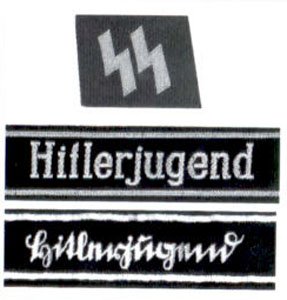
The only special insignia that were officially authorized were a cuff band that reproduced the name of the division in Latin script. This was produced only in machine-woven version in ‘BeVo-like’ format.
Another cuff band existed in machine-embroidered form with the inscription in Sütterlin letters. However, this was not a cuff band authorized by the Waffen-SS, but was intended for the Hitler Youth leadership. Nevertheless, photographs show that this cuff band was also worn by members of the division.
Frequently Asked Questions
Who commanded the 12th SS Panzer Division Hitlerjugend?
The division was initially commanded by SS-Brigadeführer Fritz Witt. After his death in June 1944, SS-Standartenführer Kurt Meyer (known as “Panzermeyer”) took command, becoming the youngest division commander in the German armed forces. He was later succeeded by Hubert Meyer, Hugo Kraas, and Fritz Krämer.
Where did the 12th SS Panzer Division fight during World War II?
The division’s main theaters of operation were the Battle of Normandy in 1944 (particularly near Caen and in the Falaise Pocket), the Battle of the Bulge in the winter of 1944–45, and the fighting in Hungary (Lake Balaton Offensive) and Austria toward the end of the war in 1945.
Who made up the 12th SS Panzer Division Hitler Youth?
The enlisted ranks of the division, formed in 1943, consisted almost exclusively of 17-year-old volunteers born in 1926 who were recruited directly from the Hitler Youth. The officers and non-commissioned officers were largely battle-hardened veterans transferred from the 1st SS Panzer Division Leibstandarte SS Adolf Hitler.
References and literature
Verbände und Truppen der deutschen Wehrmacht und Waffen-SS im Zweiten Weltkrieg 1939-1945 (Bundesarchiv-Militärarchiv und Arbeitskreis Wehrforschung)
Die gepanzerten und motorisierten deutschen Grossverbände 1935-1945 (Rolf Stoves)
The Waffen-SS (Martin Windrow)
Into the Abyss – The last years of the Waffen-SS (Ian Baxter)
Waffen-SS – From Glory to Defeat 1943-1945 (Robert Michulec, Ronald Volstad)
The Waffen-SS (3): 11. to 23. Divisions (Gordon Williamson)